How unemployed fishermen helped win the American Revolution
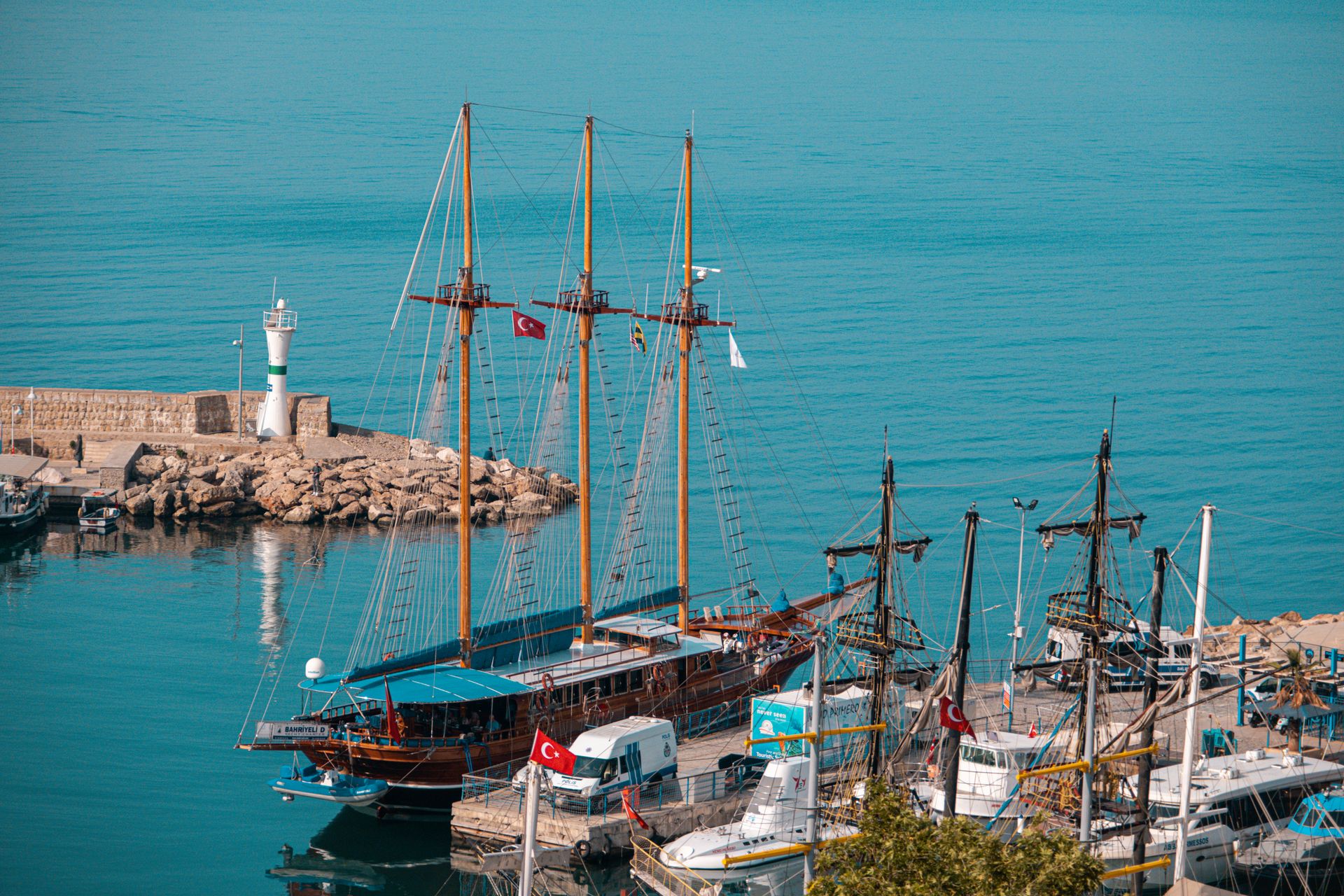
In the tense years leading up to the American Revolution, the British Parliament reached for an economic weapon it assumed would bring rebellious New England colonists to heel: cutting off their access to the fishing grounds that entire coastal communities depended on for their livelihoods. The Restraining Acts of 1775 barred New England vessels from fishing the rich waters off Newfoundland and Nova Scotia, aiming to squeeze the region's economy into submission. Historians studying the period say the policy backfired in a way British lawmakers had not anticipated, transforming thousands of idle, embittered fishermen into some of the patriot cause's most valuable recruits.
Fishing was not a marginal trade in coastal New England; it was the economic backbone of entire towns, from Marblehead and Gloucester in Massachusetts to smaller ports scattered along the region's rocky coastline. Generations of mariners had built their livelihoods, and often their family identities, around the seasonal rhythms of cod fishing in the North Atlantic, a trade that also produced exceptionally skilled sailors accustomed to hard, dangerous work in difficult waters far from shore.
When Parliament's restrictions took effect, those fishermen found themselves suddenly without income and without the trade that had defined their working lives, at precisely the moment political tensions between the colonies and the crown were reaching a breaking point. Historians describe the resulting economic hardship as acute and immediate, hitting communities that had little cushion against a sudden loss of their primary industry.
The political effect of that hardship proved significant. Men who might otherwise have remained neutral, or at least cautious, in the growing dispute between colonists and the crown had comparatively little left to lose once their livelihoods were deliberately targeted by British policy. Historians studying colonial-era recruitment patterns note that coastal fishing towns became some of the most reliably pro-independence communities in New England, a shift plausibly linked directly to the economic grievance Parliament's restrictions created.
That resentment translated into practical military value once war broke out. The Continental Army and the various state militias needed experienced sailors for a wide range of tasks beyond conventional infantry service, including manning the small fleet of armed vessels that harassed British shipping, ferrying troops and supplies along the coast, and crewing privateers that were licensed to seize British merchant vessels as prizes. Former fishermen, already skilled in seamanship and comfortable with the physical hardship of long stretches at sea, were unusually well suited to exactly this kind of naval and quasi-naval service.
Privateering in particular offered idled fishermen a path that combined patriotic motive with the prospect of financial recovery. Colonial governments and, later, the Continental Congress issued letters of marque authorising private vessel owners to attack and capture British shipping, with captured cargo and vessels sold and the proceeds shared among the ship's owners and crew. For a fisherman who had lost his livelihood to British policy, privateering offered both a chance to strike back directly at the source of his economic hardship and a potential source of income the fishing ban had eliminated.
Marblehead, a fishing town on Massachusetts's North Shore, became particularly notable for the outsized military contribution of its mariners, supplying experienced sailors and soldiers to the patriot cause throughout the war, including to a regiment that would later play a documented role in transporting General Washington's army across the Delaware River. Historians point to Marblehead's experience as a clear illustration of how deeply the fishing restrictions reshaped the political and military commitments of an entire community.
The broader pattern researchers describe fits into a well-documented historical dynamic: economic coercion intended to punish or pressure a population can, under certain conditions, generate more committed resistance than compliance, particularly when the coerced group has existing skills that translate directly into military or logistical value once conflict begins. New England's fishermen, stripped of their trade but not their seafaring expertise, were positioned almost perfectly to convert economic grievance into naval capability.
Historians caution against overstating the fishing ban as a singular cause of the broader colonial rebellion, which drew on a wide range of political, economic and ideological grievances well beyond any single policy. But within the specific story of how New England produced a disproportionate share of the fledgling patriot navy's sailors and privateer crews, the Restraining Acts' unintended consequence, converting a coerced, idle workforce into a motivated and skilled naval resource, stands as a clear and well-documented example of a colonial policy achieving close to the opposite of its intended effect.
More than two centuries later, the episode remains a case study historians return to when examining how economic pressure campaigns can misfire, turning populations meant to be pacified into some of a cause's most capable and motivated participants.
Read next

Why did Henry VIII boil his cook alive? Grisly tales from Tudor England
Tudor England is remembered for its palaces and portraits, but its criminal codes could be startlingly brutal. Historians point to the case of a royal cook sentenced to death by boiling as one of the era's strangest, and most revealing, punishments.

On this day, 21 July 1861: the First Battle of Bull Run shocks a nation expecting a short war
On 21 July 1861, Union and Confederate forces clashed near Manassas, Virginia, in the first major land battle of the American Civil War. The chaotic Confederate victory dispelled hopes on both sides that the conflict would be brief.
The Dog Line: the chain of hounds that guarded Australia's most notorious prison
In the 1800s, a chained line of guard dogs was stationed across the narrow strip of land at Eaglehawk Neck to prevent escapes from the Port Arthur penal colony in Tasmania. The unusual security measure illustrates just how ruthless colonial-era Australia's methods for controlling prisoners could be.

Who was the Cyclops Polyphemus, and why did he terrify the ancient Greeks?
The one-eyed giant Polyphemus in Homer's Odyssey is one of Greek mythology's most famous monster stories. But for ancient audiences, the Cyclops was frightening in very specific, culturally loaded ways tied to the boundaries of civilization itself.

Did the Trojan War really happen? Why even experts can't agree
The Trojan War described in Homer's Iliad has sat at the center of a myth-versus-history debate for centuries. Archaeological evidence confirms a city at Troy's likely location existed and was destroyed, but whether a decade-long siege and a wooden horse ever really happened remains genuinely contested among historians.