On this day, 16 July 1969: Apollo 11 launches for the Moon
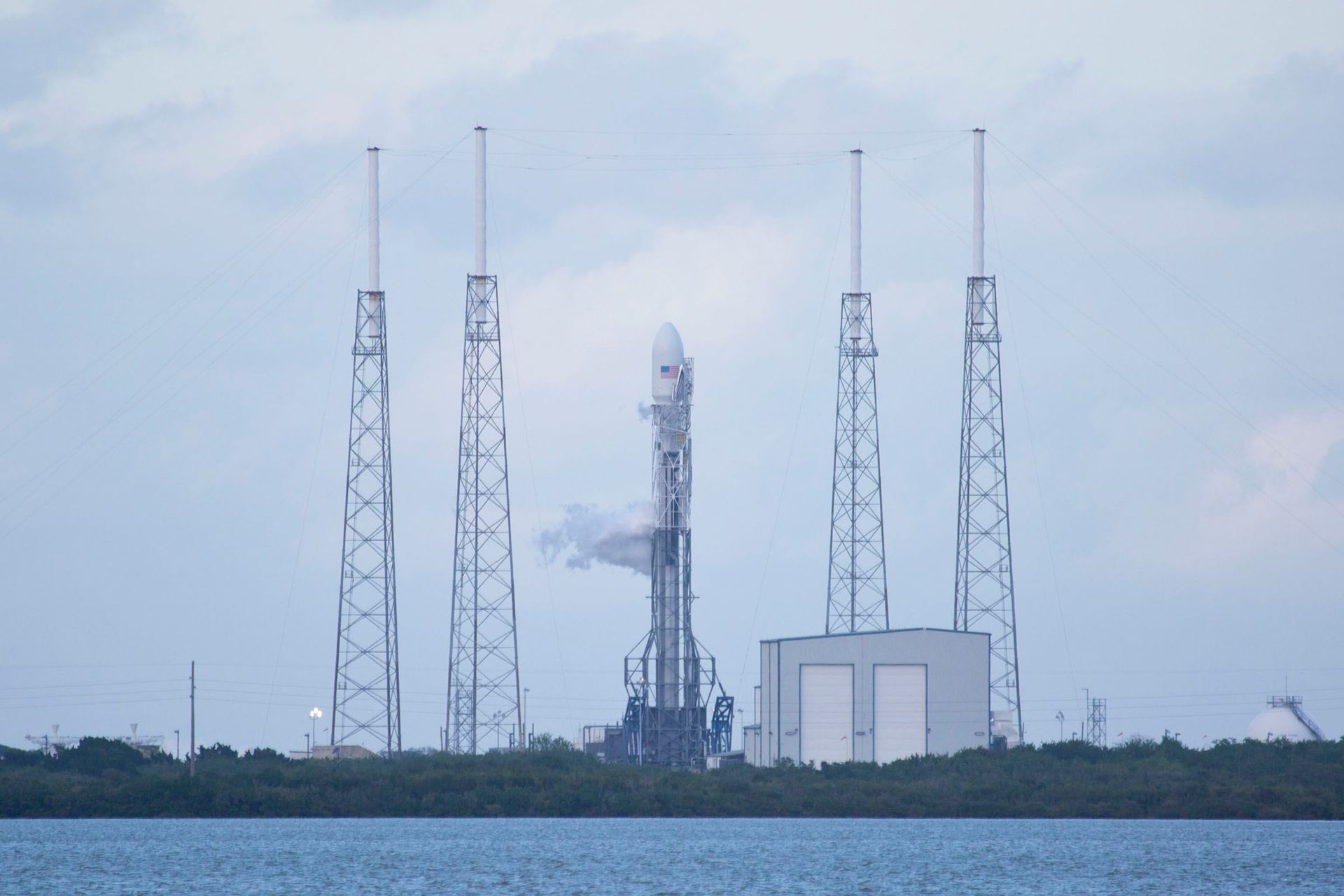
At 9:32 a.m. local time on 16 July 1969, a Saturn V rocket, still the most powerful machine ever successfully flown, rose off its launch pad at Kennedy Space Center in Florida, carrying three astronauts on a mission that would occupy just eight days but would be remembered for far longer than that. Apollo 11 was not the first crewed mission to orbit the Moon, but it was designed to be the first to put human boots on its surface, closing out a decade-long race that had consumed a significant share of American scientific, engineering and political effort.
The three men aboard were Neil Armstrong, the mission commander, Buzz Aldrin, the lunar module pilot, and Michael Collins, the command module pilot who would remain in orbit around the Moon while his crewmates descended to the surface. All three were experienced test pilots who had already flown in space during the earlier Gemini program, a deliberate choice by NASA to entrust the highest-stakes mission in the agency's history to astronauts who had already proven themselves under pressure.
The Saturn V itself was an engineering achievement nearly as significant as the mission it carried. Standing 363 feet tall, taller than most buildings of its era, it remains, more than half a century later, the tallest, heaviest and most powerful rocket ever brought to operational flight, a record that reflects both how difficult the underlying engineering problem was and how enormous the resources devoted to solving it were. Its first stage alone burned more fuel in under three minutes than most rockets use in their entire flight, generating the thrust needed to overcome Earth's gravity with a fully loaded spacecraft and lunar lander.
The launch itself was a moment of significant national and global attention, watched by roughly a million spectators who gathered near the Florida coast and hundreds of millions more around the world following the broadcast. The Cold War-era space race between the United States and the Soviet Union had given the mission stakes well beyond pure scientific exploration; a successful Moon landing would represent a decisive symbolic victory in a broader ideological competition that had shaped much of the preceding decade's politics and public imagination.
Four days after launch, on 20 July 1969, Armstrong and Aldrin descended to the lunar surface in the Eagle lunar module while Collins continued to orbit overhead in the command module Columbia. Armstrong's first steps onto the surface, accompanied by the now-famous words about a small step and a giant leap, were broadcast live to an estimated worldwide television audience of hundreds of millions, one of the largest shared media events in human history at that point.
The mission's success validated an enormous, decade-long national investment that had begun with President John F. Kennedy's 1961 commitment to land a man on the Moon before the decade was out, a goal that, at the time it was announced, exceeded the technological capability the United States actually possessed. The intervening years saw NASA and its contractors solve engineering problems that had no precedent, from the guidance computers needed to navigate to the Moon to the life support systems required to keep astronauts alive in an environment with no atmosphere, extreme temperature swings and no prior human presence.
More than five decades on, Apollo 11 remains a reference point for what coordinated, well-resourced engineering effort can achieve within a defined timeline, and the launch itself, the moment the mission actually left the ground with no guarantee of success, is often what popular memory returns to as the point where an enormous national ambition first became physically irreversible. The Moon landing that followed four days later is the more commonly remembered image, but the risk, scale and ambition of the entire endeavor were arguably most exposed in the tens of seconds it took the Saturn V to clear its own launch tower.
The astronauts themselves returned safely on 24 July, splashing down in the Pacific Ocean and completing a mission that had, at every stage, carried real and openly acknowledged risk of catastrophic failure. NASA had prepared contingency statements in case the crew could not return from the lunar surface, a stark reminder that the triumphant footage now associated with the mission obscures just how uncertain its outcome felt at the time, including on the morning the Saturn V first cleared the tower.
Read next

Why did Henry VIII boil his cook alive? Grisly tales from Tudor England
Tudor England is remembered for its palaces and portraits, but its criminal codes could be startlingly brutal. Historians point to the case of a royal cook sentenced to death by boiling as one of the era's strangest, and most revealing, punishments.

On this day, 21 July 1861: the First Battle of Bull Run shocks a nation expecting a short war
On 21 July 1861, Union and Confederate forces clashed near Manassas, Virginia, in the first major land battle of the American Civil War. The chaotic Confederate victory dispelled hopes on both sides that the conflict would be brief.

The Dog Line: the chain of hounds that guarded Australia's most notorious prison
In the 1800s, a chained line of guard dogs was stationed across the narrow strip of land at Eaglehawk Neck to prevent escapes from the Port Arthur penal colony in Tasmania. The unusual security measure illustrates just how ruthless colonial-era Australia's methods for controlling prisoners could be.

Who was the Cyclops Polyphemus, and why did he terrify the ancient Greeks?
The one-eyed giant Polyphemus in Homer's Odyssey is one of Greek mythology's most famous monster stories. But for ancient audiences, the Cyclops was frightening in very specific, culturally loaded ways tied to the boundaries of civilization itself.

Did the Trojan War really happen? Why even experts can't agree
The Trojan War described in Homer's Iliad has sat at the center of a myth-versus-history debate for centuries. Archaeological evidence confirms a city at Troy's likely location existed and was destroyed, but whether a decade-long siege and a wooden horse ever really happened remains genuinely contested among historians.