Was 'Bad King John' really that bad? What historians now say
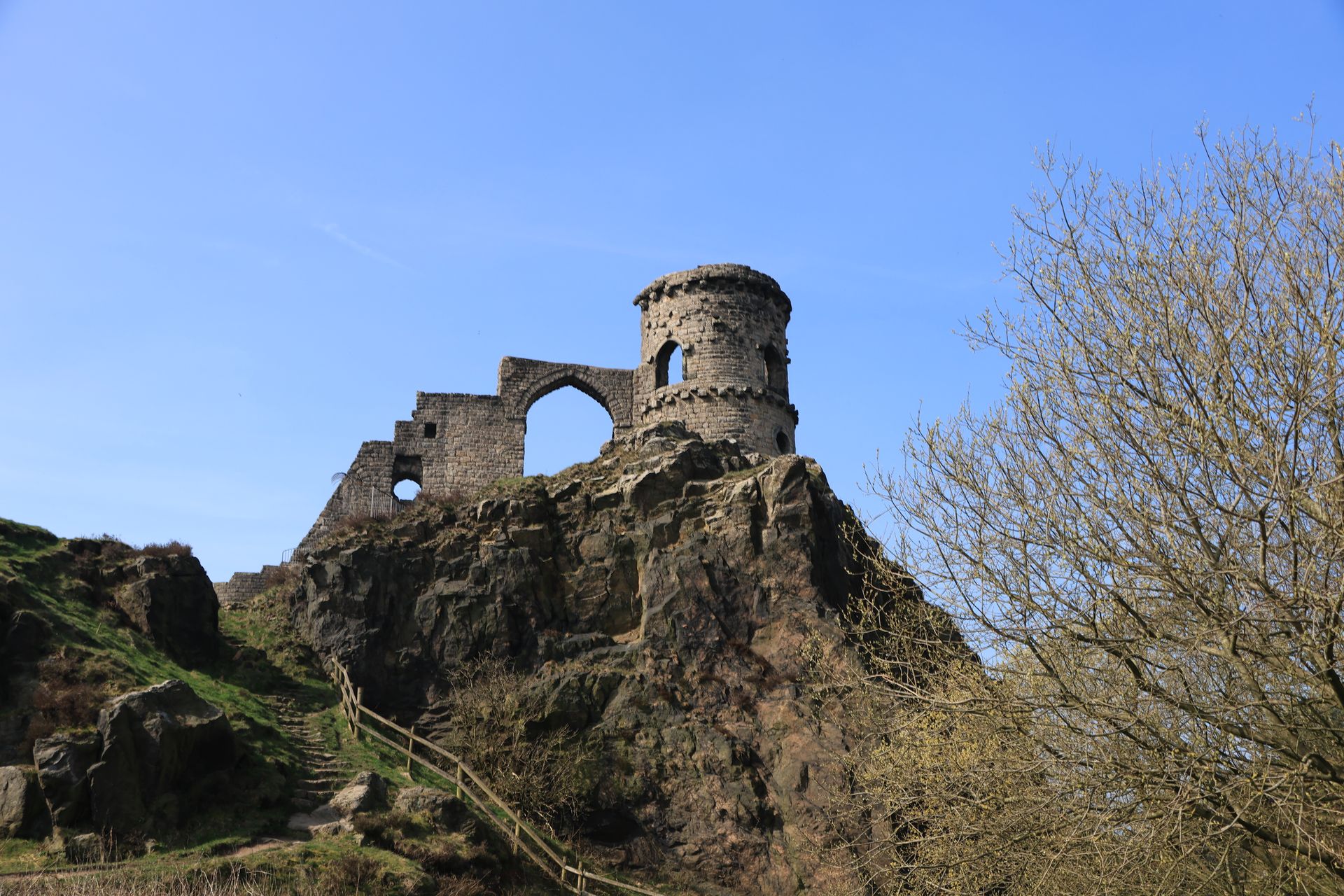
Few English monarchs carry a reputation as uniformly negative as King John, who ruled from 1199 to 1216 and has been cast, in popular memory, as scheming, cruel and incompetent in roughly equal measure. Much of that reputation was cemented centuries after his death, particularly through his recurring role as the villainous antagonist in retellings of the Robin Hood legend, a folk tale with only a loose relationship to verified historical events. Historians who study his actual reign paint a picture that is less cartoonish, though not, by most accounts, especially flattering either.
John came to the throne after the death of his brother, Richard the Lionheart, whose reign had been defined by crusading abroad and left the English treasury and administrative machinery strained by years of financing foreign wars. John inherited both his brother's throne and his brother's fiscal problems, along with an ongoing and costly conflict with the French crown over the Angevin Empire's continental territories, lands in modern-day France that English kings had ruled since the previous century.
It was on the continental front that John's reign suffered its most consequential failure. Over the course of his rule, he lost the vast majority of England's territories in France, including the ancestral Duchy of Normandy, to King Philip II. This wasn't simply a military defeat but a fundamental restructuring of what the English crown actually controlled, and it earned John a lasting nickname among some contemporaries and later chroniclers: John Lackland, a reference to territorial losses that his father and brother had spent decades acquiring and defending.
To fund the ongoing wars aimed at recovering those continental losses, John turned to increasingly aggressive taxation and fee extraction from his barons, the powerful landowning nobility whose cooperation and financial support English kings depended on to govern effectively. John's methods, which included heavy scutage payments, arbitrary fines, and the exploitation of feudal inheritance rights to extract money from noble families, alienated a significant portion of the very class he needed to keep on his side.
That alienation eventually boiled over into open rebellion. A coalition of barons, having exhausted more conventional means of pressing their grievances, took up arms against John in 1215, forcing him into negotiations at Runnymede that produced Magna Carta, the charter that limited royal authority and established, at least in principle, that the king was subject to the law rather than above it. Historians studying this period emphasize that Magna Carta was not conceived as a grand democratic reform but as a practical settlement between a king and his most powerful subjects, aimed at resolving a specific set of grievances rather than establishing universal rights.
John's later reputation for treachery was cemented in part by his own conduct after signing Magna Carta: he sought and received papal support to annul the charter almost immediately, plunging England into the First Barons' War, a civil conflict that was still ongoing when John died in 1216, reportedly from dysentery contracted during a military campaign. That he died in the middle of an unresolved civil war he had provoked did little to improve the historical assessment of his reign.
Contemporary historians, while not rehabilitating John into a misunderstood competent ruler, generally offer a more textured account than the pantomime villain of popular legend: a king who inherited a difficult financial and territorial position, made that position considerably worse through his own decisions and personal conduct, and whose reign nonetheless produced, largely by accident rather than design, one of the foundational documents in the development of constitutional limits on royal power. Whether that makes him a bad king who stumbled into an important legacy, or simply a bad king whose failures happened to matter, is a distinction historians continue to debate.
What's less debated is the gap between the historical John and the folkloric one. The Robin Hood legend's version of John, plotting against a heroic absent king and menacing Sherwood Forest's peasantry, owes far more to centuries of storytelling convention than to the documented record of a monarch whose actual failures were fiscal, military and diplomatic rather than the moustache-twirling cruelty later fiction assigned him.
Read next
Why did Henry VIII boil his cook alive? Grisly tales from Tudor England
Tudor England is remembered for its palaces and portraits, but its criminal codes could be startlingly brutal. Historians point to the case of a royal cook sentenced to death by boiling as one of the era's strangest, and most revealing, punishments.

On this day, 21 July 1861: the First Battle of Bull Run shocks a nation expecting a short war
On 21 July 1861, Union and Confederate forces clashed near Manassas, Virginia, in the first major land battle of the American Civil War. The chaotic Confederate victory dispelled hopes on both sides that the conflict would be brief.
The Dog Line: the chain of hounds that guarded Australia's most notorious prison
In the 1800s, a chained line of guard dogs was stationed across the narrow strip of land at Eaglehawk Neck to prevent escapes from the Port Arthur penal colony in Tasmania. The unusual security measure illustrates just how ruthless colonial-era Australia's methods for controlling prisoners could be.

Who was the Cyclops Polyphemus, and why did he terrify the ancient Greeks?
The one-eyed giant Polyphemus in Homer's Odyssey is one of Greek mythology's most famous monster stories. But for ancient audiences, the Cyclops was frightening in very specific, culturally loaded ways tied to the boundaries of civilization itself.

Did the Trojan War really happen? Why even experts can't agree
The Trojan War described in Homer's Iliad has sat at the center of a myth-versus-history debate for centuries. Archaeological evidence confirms a city at Troy's likely location existed and was destroyed, but whether a decade-long siege and a wooden horse ever really happened remains genuinely contested among historians.