On this day in 1908: the Tunguska event flattens a Siberian forest
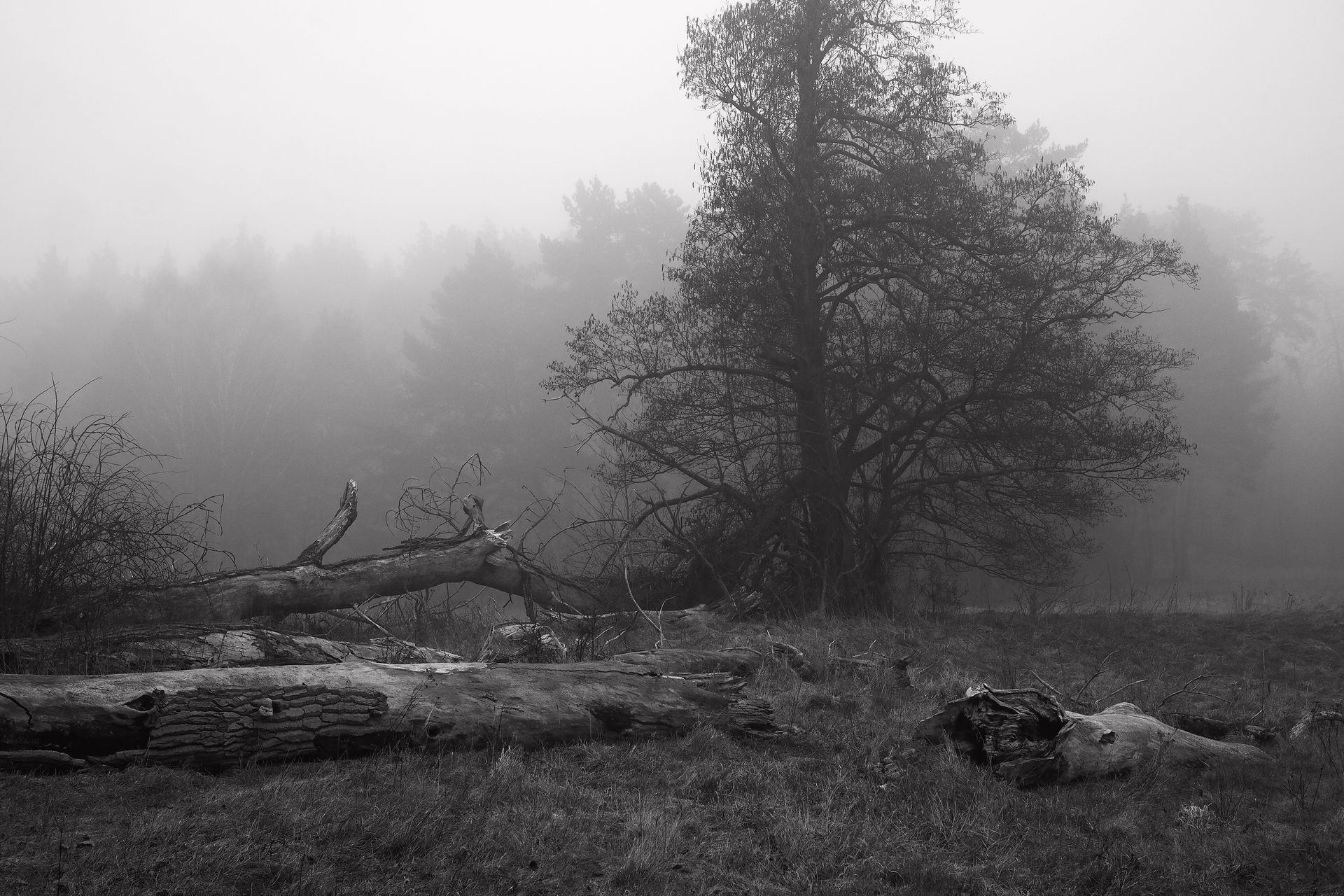
Early on the morning of 30 June 1908, in the remote Siberian taiga near the Podkamennaya Tunguska River, the sky tore open. A column of blue-white light, described by witnesses as brighter than the sun, crossed the heavens, followed by a flash and a shockwave that knocked people off their feet hundreds of kilometres away. By the time it was over, an estimated 80 million trees had been flattened across more than 2,000 square kilometres of forest.
The scale of the blast was extraordinary. The energy released is generally estimated by scientists at the equivalent of many megatons of TNT, hundreds of times the force of the bomb later dropped on Hiroshima. Seismographs registered the disturbance, and atmospheric effects, including unusually bright night skies, were noted across Europe in the days that followed.
Yet for years almost no one investigated. The region was so remote, and Russia so consumed by war and revolution in the following decade, that the first serious scientific expedition did not reach the area until 1927, nearly two decades later, led by the mineralogist Leonid Kulik.
What Kulik found was strange. Across a vast area, trees lay on the ground in a radial pattern, their trunks pointing outward from a central zone, as if blown over by a blast from above. Near the centre, some trees remained standing but stripped of their branches and bark. Crucially, Kulik found no impact crater, which deepened rather than resolved the mystery.
The absence of a crater is the key to the most widely accepted explanation. According to the scientific consensus reflected on Wikipedia, the Tunguska event was most likely an airburst, the explosion of an asteroid or comet fragment several kilometres above the ground. Entering the atmosphere at enormous speed, the object would have heated and disintegrated in mid-air, releasing its energy as a blast wave rather than striking the surface intact.
This explanation accounts for the pattern of devastation. An explosion high in the atmosphere would flatten trees over a wide area while leaving no single crater, and the trees directly beneath the blast, struck from straight above, would lose their branches but remain upright. The radial flattening fans out exactly as a downward and outward shockwave would predict.
Debate has continued over the details, particularly whether the object was a stony asteroid or a fragment of comet, which differ in composition and behaviour. The lack of large recovered fragments has complicated the question, though microscopic particles found in the region have been studied as possible traces. The broad airburst interpretation, however, commands wide agreement.
The Tunguska event endures as more than a historical curiosity because of what it implies. It demonstrated that an object need not reach the ground to cause catastrophic damage, and that an airburst over a populated area could be devastating. Had the same event occurred over a city rather than empty taiga, the loss of life would have been immense, a point that has shaped modern thinking about planetary defence.
That awareness has practical consequences today. Astronomers now systematically survey the skies for near-Earth objects, cataloguing asteroids whose orbits bring them close to the planet, precisely so that a future Tunguska-scale event might be anticipated. The date itself is marked internationally as Asteroid Day, chosen to raise awareness of the impact hazard.
More than a century later, the Tunguska event remains the largest impact event in recorded history and a vivid reminder of forces that operate on a cosmic scale. A quiet stretch of Siberian forest, levelled in seconds on a June morning, still stands as one of the clearest warnings of what the sky can occasionally deliver.
Read next

Why did Henry VIII boil his cook alive? Grisly tales from Tudor England
Tudor England is remembered for its palaces and portraits, but its criminal codes could be startlingly brutal. Historians point to the case of a royal cook sentenced to death by boiling as one of the era's strangest, and most revealing, punishments.

On this day, 21 July 1861: the First Battle of Bull Run shocks a nation expecting a short war
On 21 July 1861, Union and Confederate forces clashed near Manassas, Virginia, in the first major land battle of the American Civil War. The chaotic Confederate victory dispelled hopes on both sides that the conflict would be brief.

The Dog Line: the chain of hounds that guarded Australia's most notorious prison
In the 1800s, a chained line of guard dogs was stationed across the narrow strip of land at Eaglehawk Neck to prevent escapes from the Port Arthur penal colony in Tasmania. The unusual security measure illustrates just how ruthless colonial-era Australia's methods for controlling prisoners could be.

Who was the Cyclops Polyphemus, and why did he terrify the ancient Greeks?
The one-eyed giant Polyphemus in Homer's Odyssey is one of Greek mythology's most famous monster stories. But for ancient audiences, the Cyclops was frightening in very specific, culturally loaded ways tied to the boundaries of civilization itself.

Did the Trojan War really happen? Why even experts can't agree
The Trojan War described in Homer's Iliad has sat at the center of a myth-versus-history debate for centuries. Archaeological evidence confirms a city at Troy's likely location existed and was destroyed, but whether a decade-long siege and a wooden horse ever really happened remains genuinely contested among historians.